
ARROW-LEAVED ASTER
Symphyotrichum sagittifolium
SUNFLOWER FAMILY (Asteraceae)
 Identification
- Flowering time - September, October
- Common in upland woods at FF. Less common at NW.
- Lavender/light blue flowers
- Arrow to heart shaped, toothed lower leaves
- Lower leaves with long, winged stems
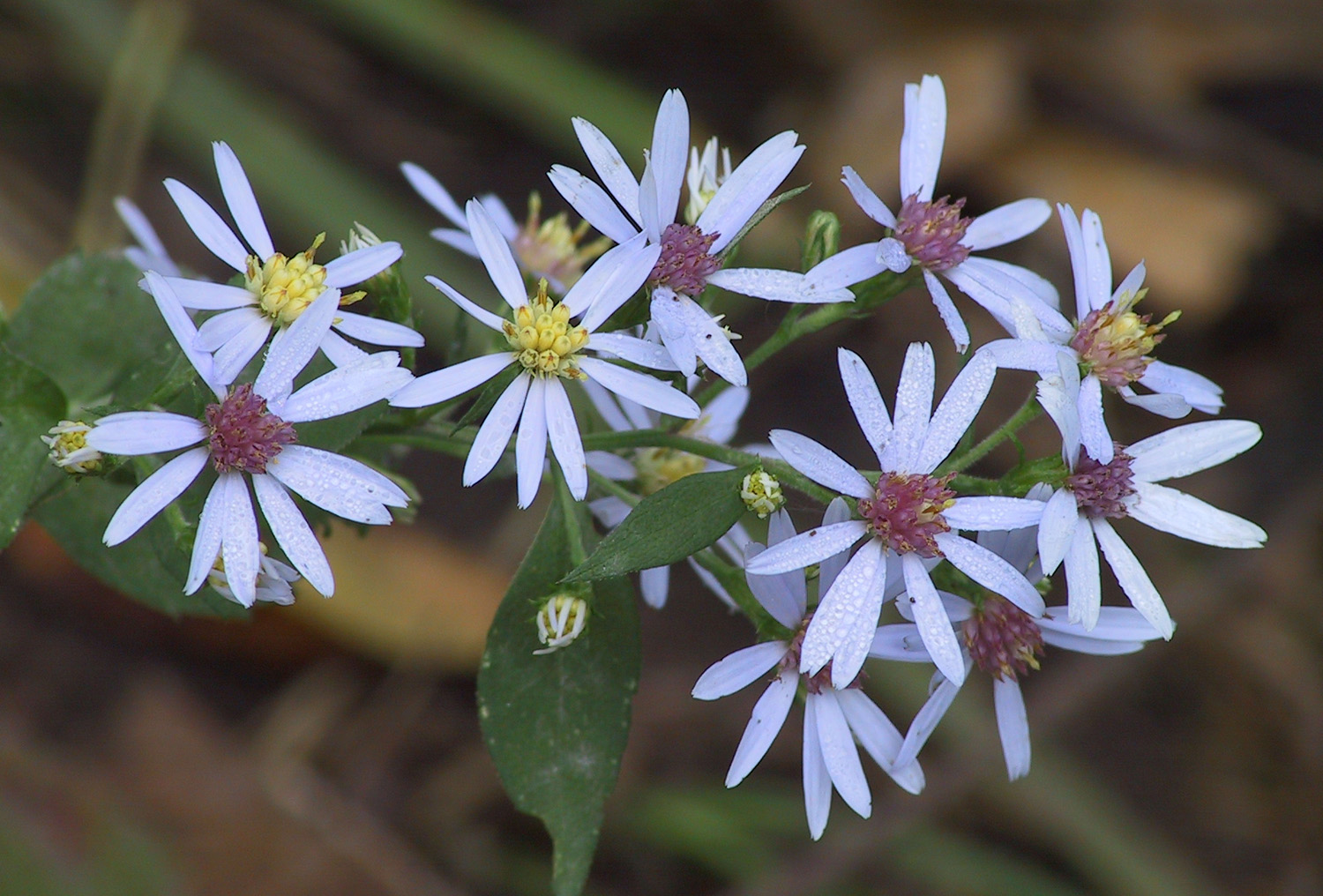
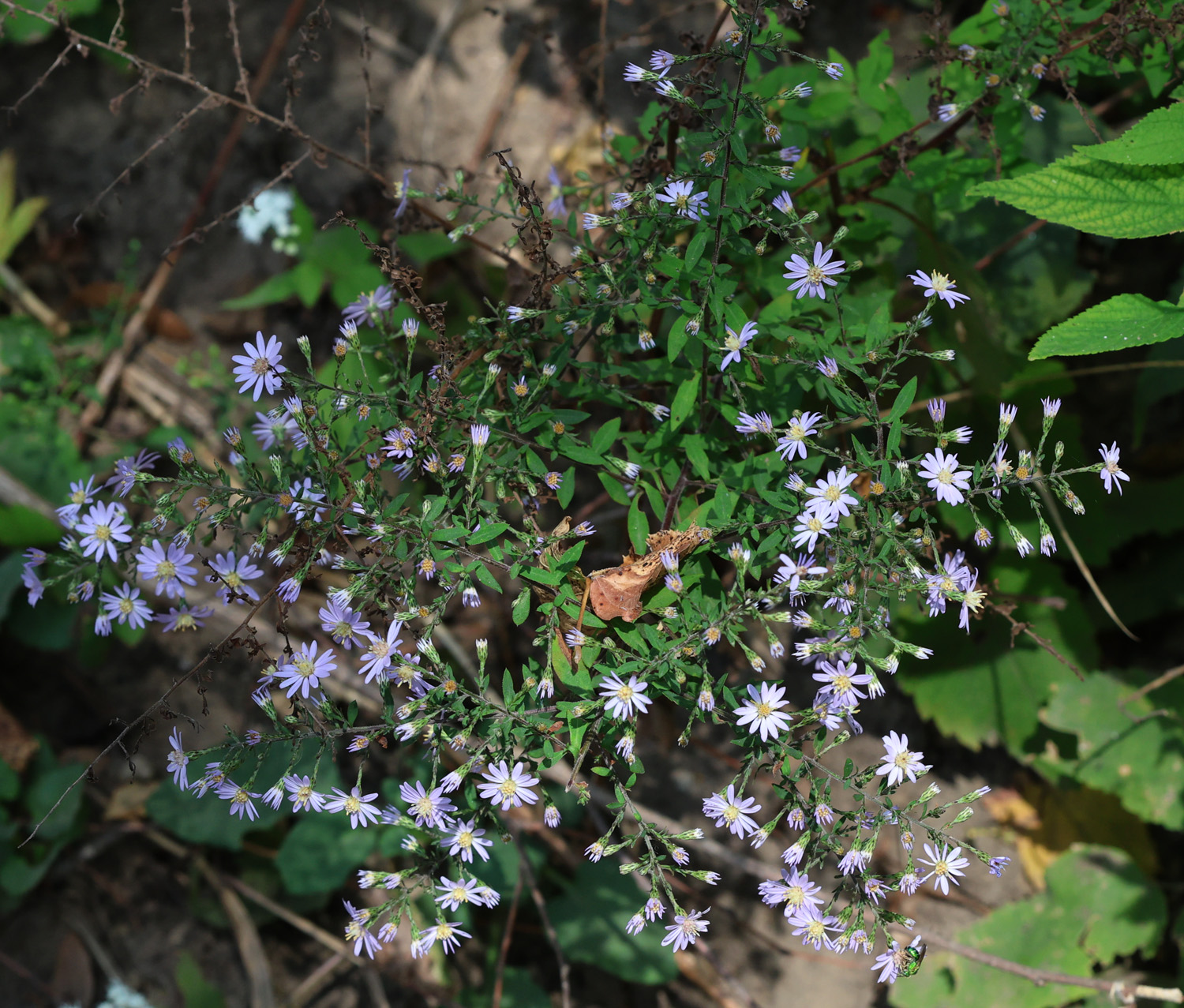
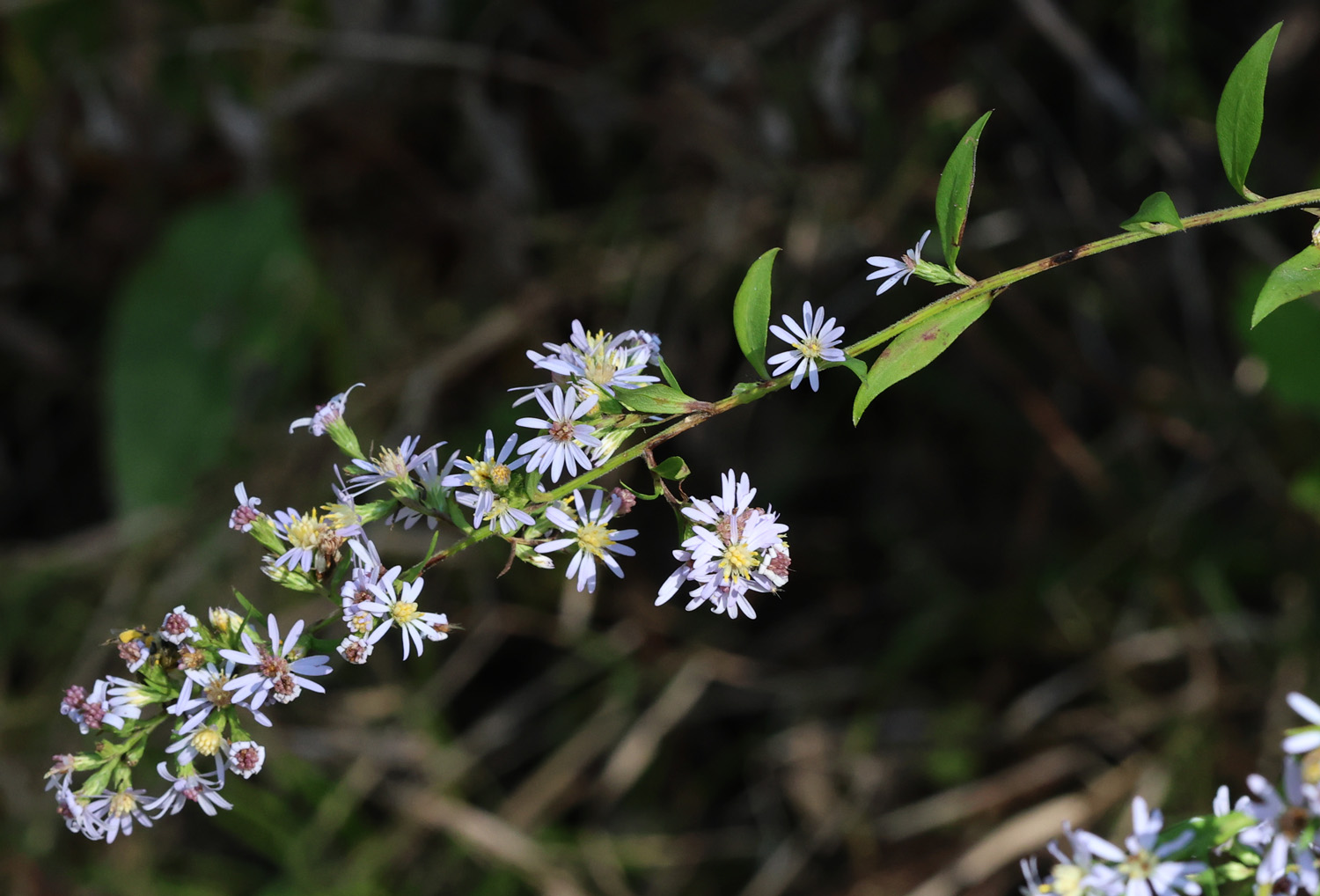
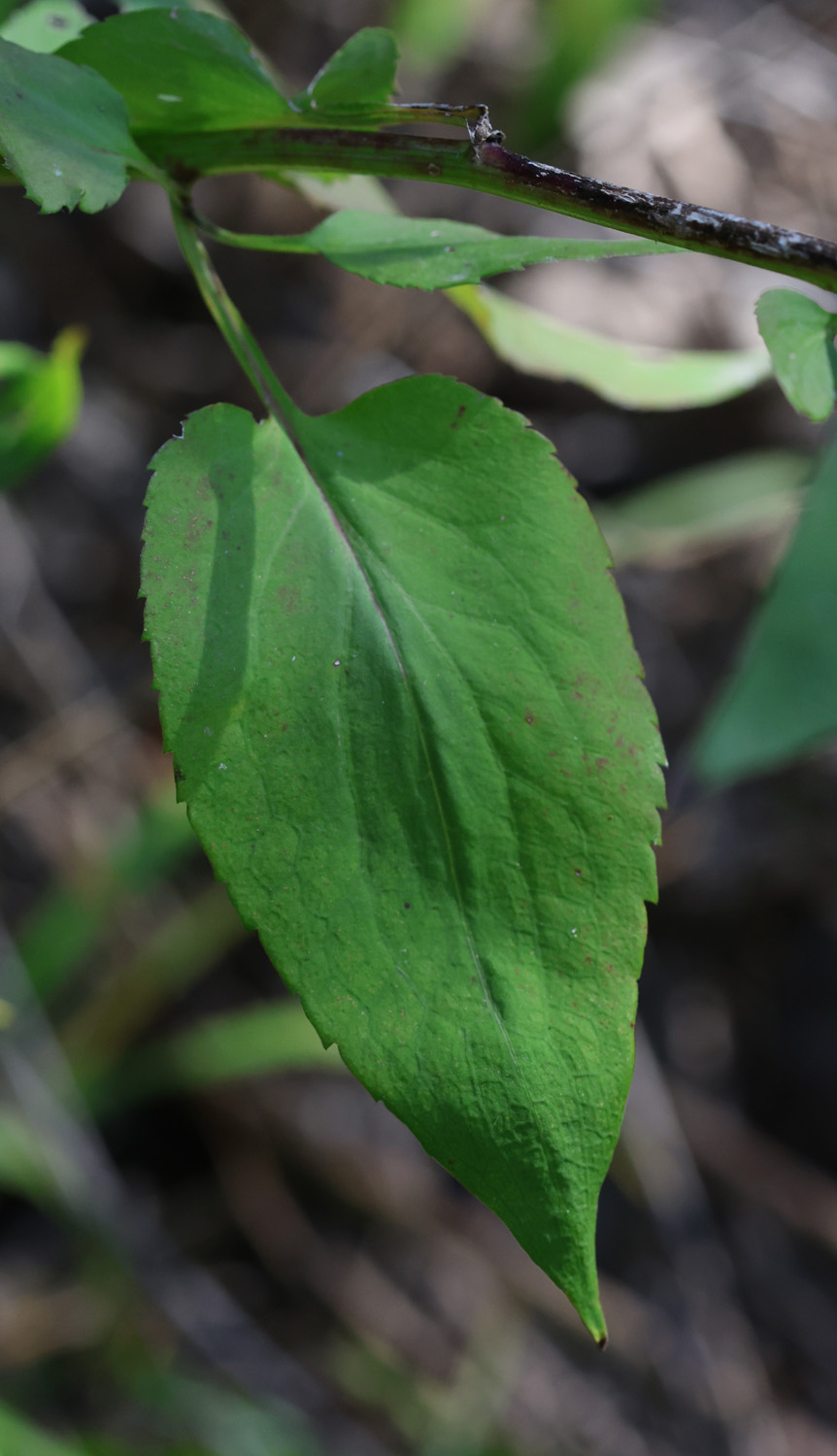
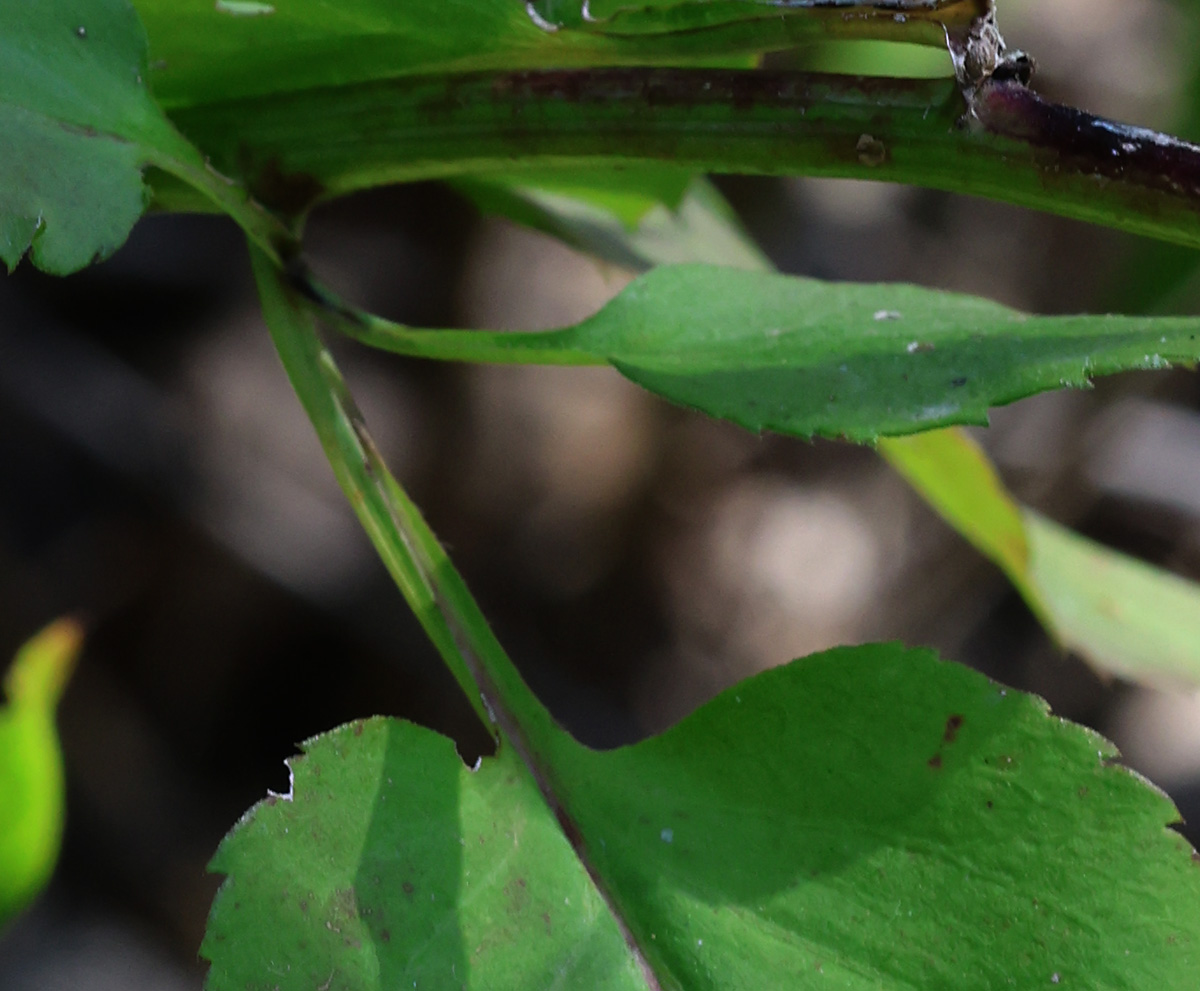
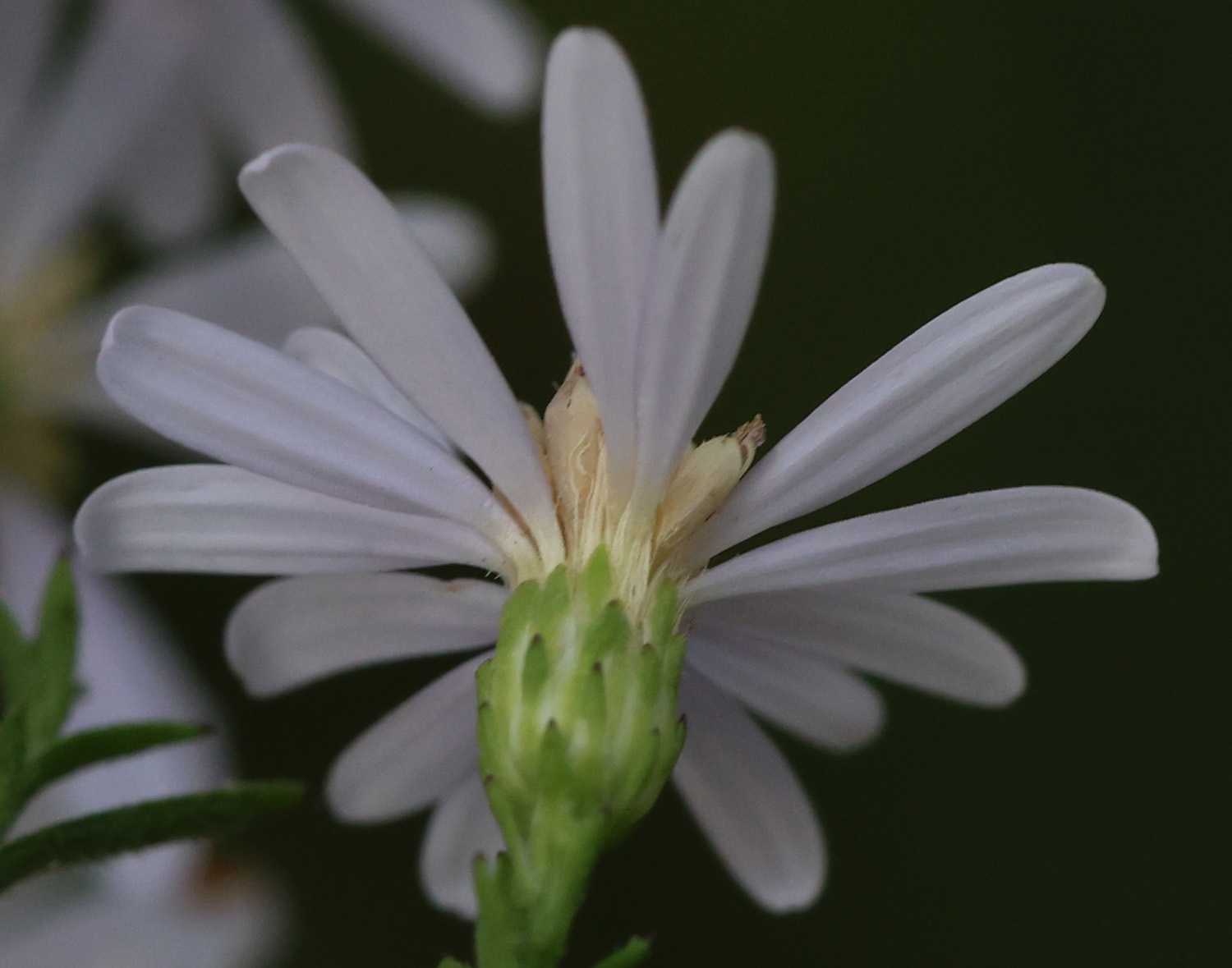
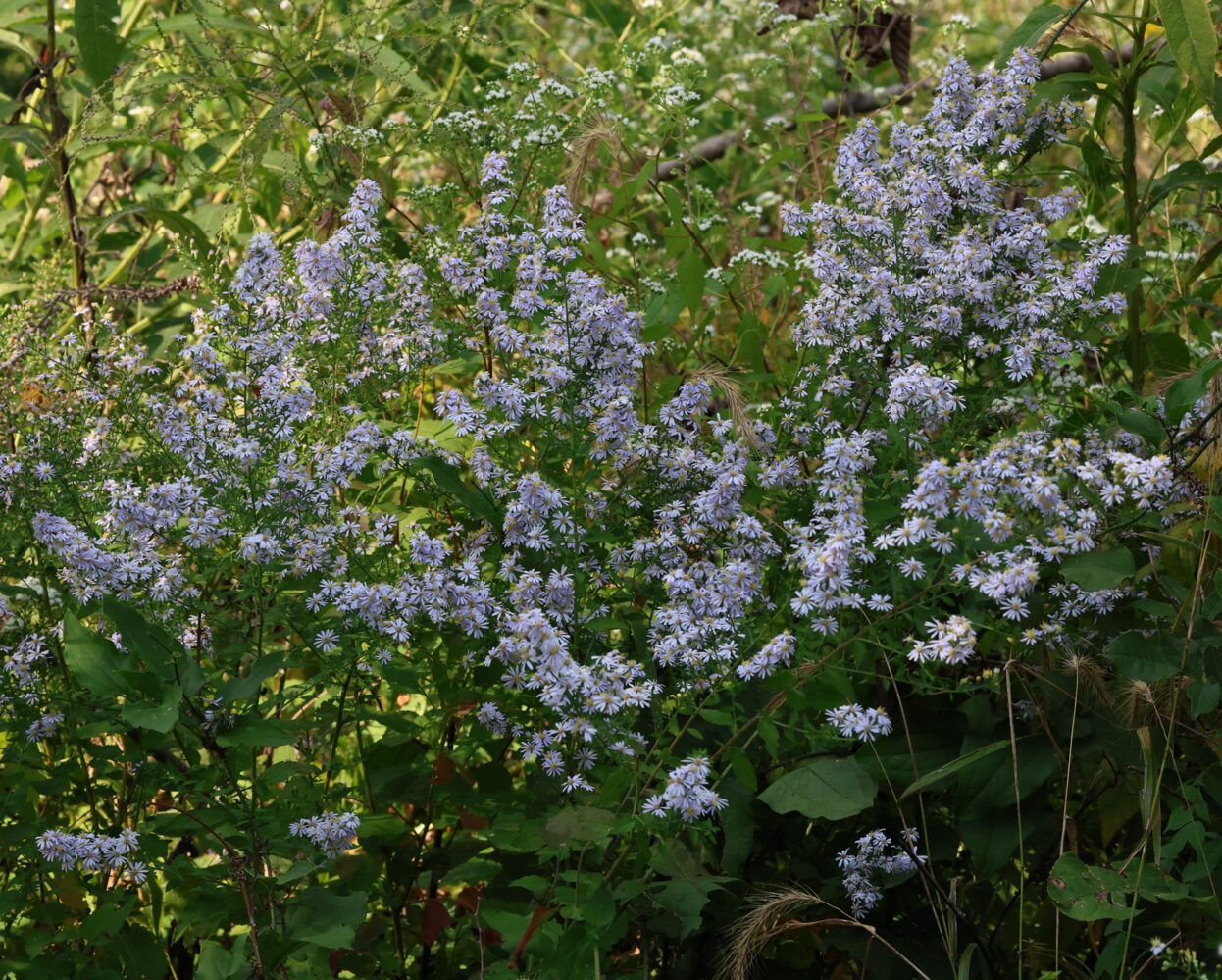
This aster is a native perennial. The smooth stems can be up to 6 feet tall, but most of our plants are much shorter. Alternate arrow to heart shaped lower leaves with toothed margins are up to 4 inches long and have long, often winged, stems (E,F). Upper leaves are smaller with shorter or stalkless stems (D). The flowers are in elongated clusters at the top of the plant (A). The 8-15 lavender, light blue or whitish ray florets surround a yellow central disk which turns reddish to purple as it matures (B). Narrow greenish bracts (phyllaries) below the flower often have darker green, diamond-shaped tips (G).
Any lavender or light blue aster having toothed, arrow to heart-shaped lower leaves with long, winged stems found in our upland woodlands is almost certainly Arrow-leaved Aster. Very similar Drummond’s Aster (S. drummondii) which has hairy stems, is possible but there have been no documented recent occurrences.
Grows in upland and lowland oak woodlands, flowering in September and October. Common in upland woods south of Gifford Road at Fontenelle Forest. Less common elsewhere in uplands at FF and NW. Has been found in lowland woods on Krimlofski Tract at Neale Woods.
Like several of our other local asters, Arrow-leaved Aster has recently been moved to a new genus; from Aster to Symphyotrichum.
The content of NatureSearch is provided by dedicated volunteer Naturalists of Fontenelle Forest who strive to provide the most accurate information available. Contributors of the images retain their copyrights. The point of contact for this page is: Roland Barth.