
COW PARSNIP
Heracleum lanatum
PARSLEY FAMILY (Apiaceae)
 Identification
- Flowering time - May, June
- Common on floodplain at both FF and NW
- Large plant 6-8 feet tall
- Large leaves divided into 3 leaflets
- Flat topped flower cluster (compound umbel) composed of 10-30 smaller clusters (umbellets)
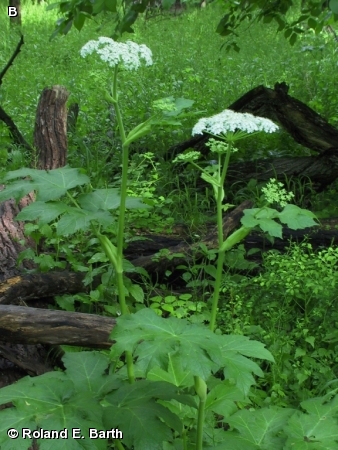
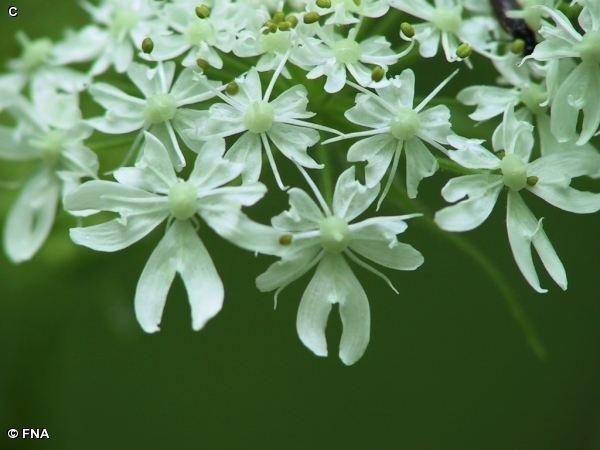
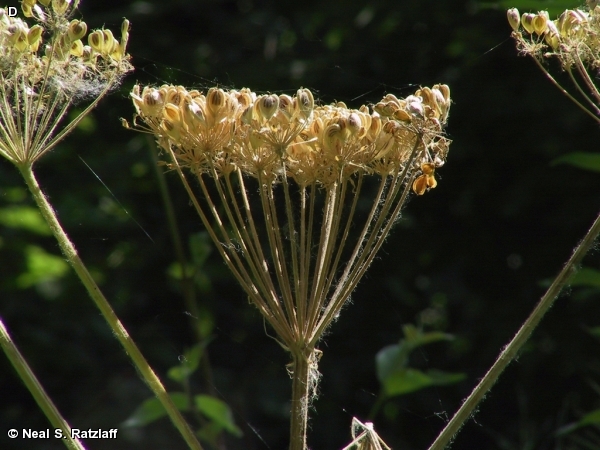
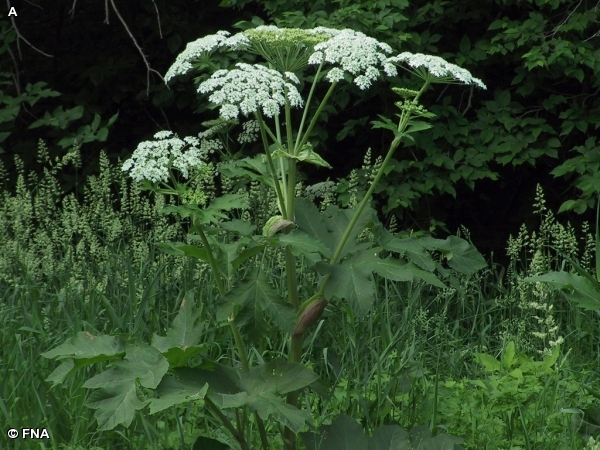
This large native perennial plant, 6 feet or more tall, has thick, hollow stems. The huge leaves are 12 inches or more across (A,B) and are divided into 3 variably lobed (palmately compound) leaflets. The flowers are white and numerous, in flat-topped clusters (compound umbels) (A,B). Each cluster is composed of up to 30 smaller clusters (umbellets) containing many tiny flowers with 5 variably notched petals of unequal size (C). The flat-topped seed clusters are seen by late June; they are light brown (D). This plant has an unpleasant odor.
Grows on floodplains and woodland edges where it blooms from May through June. Common on the floodplain at both Fontenelle Forest and Neale Woods where these prominent plants are easy to spot.
Called “beaver medicine” by the Omaha-Ponca. The dried and pulverized roots were mixed with beaver dung and placed in the hole where their sacred pole was planted. The Ponca also used the roots from this plant in a poultice for boils.
The content of NatureSearch is provided by dedicated volunteer Naturalists of Fontenelle Forest who strive to provide the most accurate information available. Contributors of the images retain their copyrights. The point of contact for this page is: Roland Barth.