
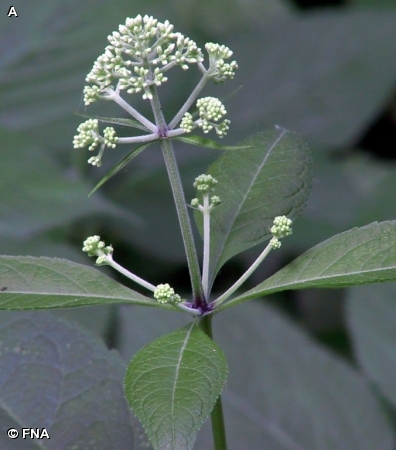
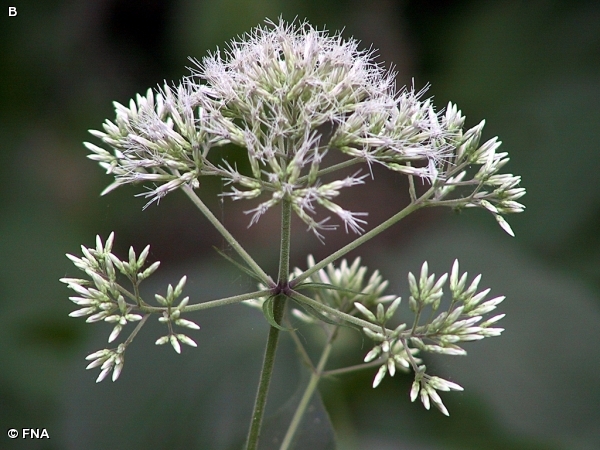
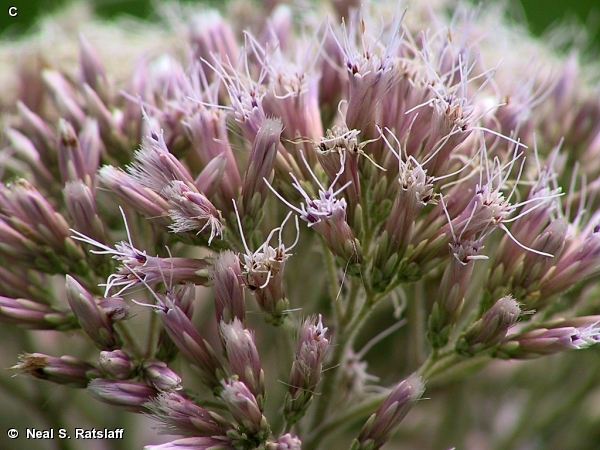
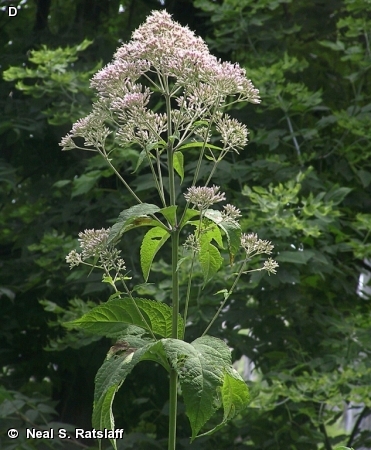
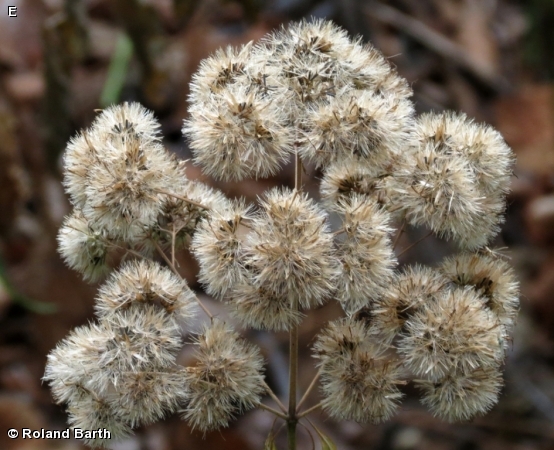
This native perennial can grow to 6 feet and taller. The erect stems are green with purple only at the leaf nodes (A). The large, lance shaped leaves are in whorls of 3 or 4 (A,D). The tiny pale lavender flowers are arranged in domed compound clusters (umbels) (B,C). Image (E) shows the developing seed clusters.Differentiated from the other Bonesets and Joe-Pye weeds by the green stems with purple only at the leaf nodes, the whorled leaves and the pale lavender flowers.
Grows in moist upland woods, flowering in July and August. In Fontenelle Forest, uncommon, for instance on Hawthorn Trail. At Neale Woods, common along River Road; rare along Maidenhair Trail.
This species seems to be heavily browsed by deer, especially after it starts to bloom.
The content of NatureSearch is provided by dedicated volunteer Naturalists of Fontenelle Forest who strive to provide the most accurate information available. Contributors of the images retain their copyrights. The point of contact for this page is: Roland Barth.